
A new Weed Science Society of America research article pinpoints optimal laser energy levels and pattern configurations to both control weeds and protect turfgrass from injury

WESTMINSTER, Colorado – 23 April 2026 – A Weed Science Society of America (WSSA) journal, Weed Science, recently published a research article that proves lasers are a feasible alternative or complementary option to chemical control for turfgrass weed management. In this study, researchers conducted field experiments on Virginia Polytechnic Institute and State University research fairways in Blacksburg, Virginia, during July 2024 and March 2025, to evaluate varying laser intensity levels and application patterns on four turf and weed species.
“Our research demonstrates that we can strategically customize laser parameters to improve time and energy efficiency while maintaining effective weed control,” says Shawn Askew, Ph.D., Virginia Tech professor, WSSA member scientist, and corresponding author for the research. “In addition, our work shows that changes in laser pattern line spacing can influence weed control, potentially reducing energy requirements by half.”
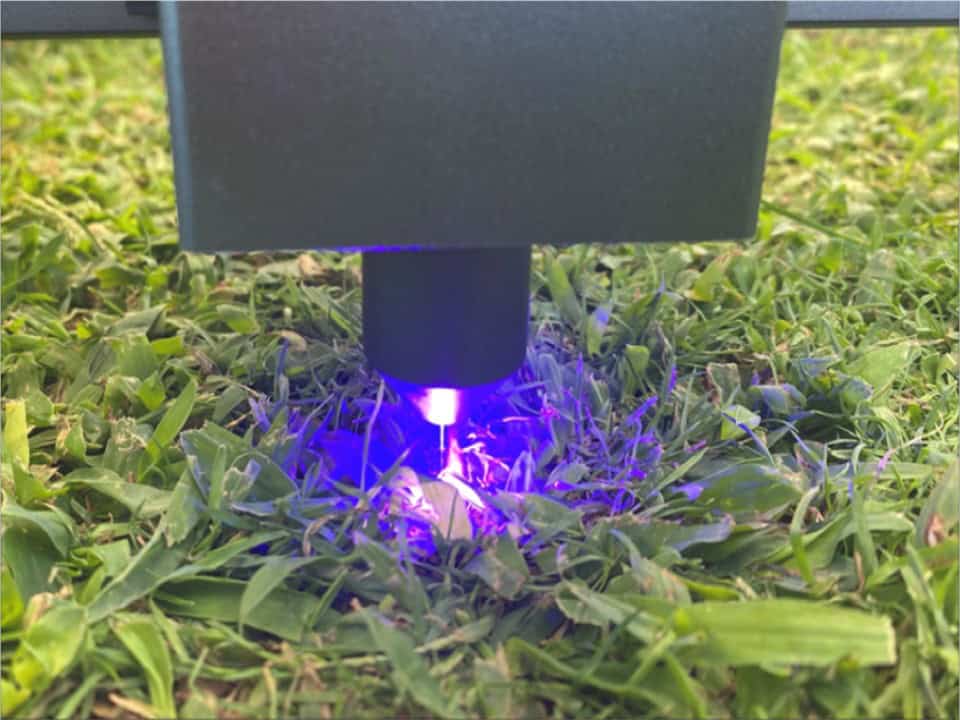
Virginia Tech graduate students, Juan R. Romero and Navdeep Godara, authored the study along with Askew. According to the study results, “line spacing significantly influenced weed control efficacy, with 4-mm spacing improving green cover reduction by up to 10% over denser patterns at the same [pattern-averaged energy densities]. Bermudagrass recovered fully within 24 days post-treatment, while creeping bentgrass showed prolonged injury at higher intensities and wider spacings.”
Laser weed control is emerging as a non-chemical technology made feasible by recent advances in artificial intelligence and automation, points out Askew. “It works by raising the temperature inside targeted plant parts to lethal levels, disrupting cell integrity and halting essential biological processes,” he says. “The need to try lasers and other alternative weed control methods has increased due to restrictive pesticide regulations, complex registration procedures, and additional legislative constraints imposed by the Food Quality Protection Act and the Endangered Species Act.”
He adds that the laser treatment effectiveness observed in this study is consistent with previous research. “As demonstrated by earlier studies, this research shows the ability of lasers to disrupt critical plant tissues through focused energy application, thereby minimizing environmental disturbance that might occur with chemical or mechanical methods.”
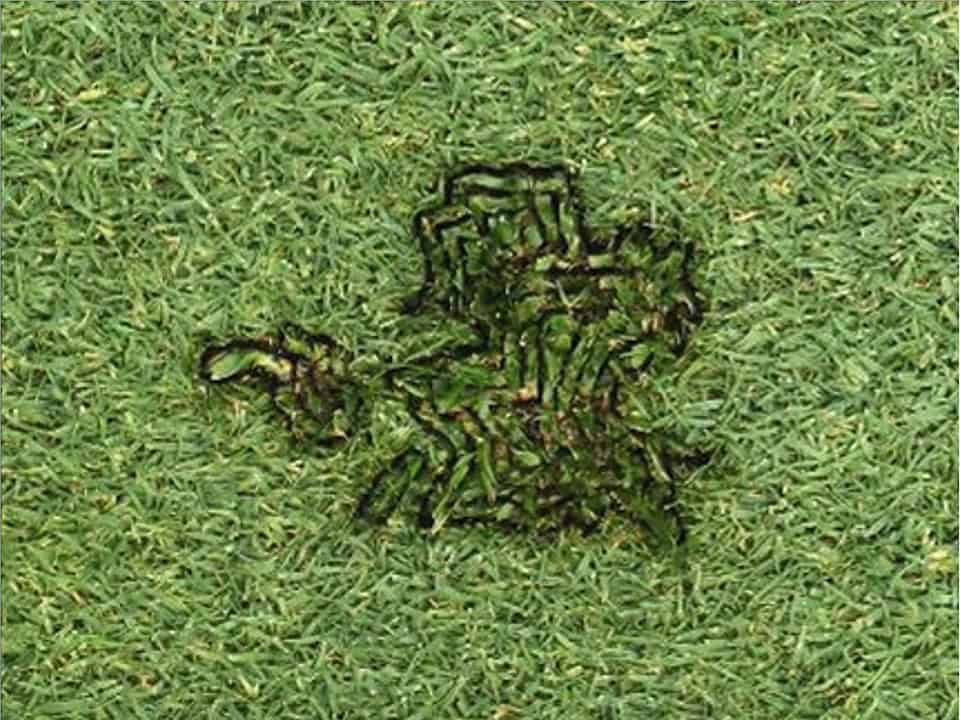
Askew adds that future studies will investigate how environmental conditions might affect laser efficiency and further explore laser application patterns to optimize results. “Future work should evaluate a wider range of turf and weed species at different growth stages and incorporate higher-power or alternative laser types to improve treatment speed and efficacy,” he notes. “Improving weed detection algorithms will also be critical to boosting precision and reducing costs. By addressing these technical and biological challenges, laser weeding is well-positioned to become useful tool in sustainable turfgrass management.”
More information about the study is available online in the article: “Response of Annual Bluegrass (Poa annua), Bermudagrass (Cynodon dactylon), Creeping Bentgrass (Agrostis stolonifera), and Smooth Crabgrass (Digitaria ischaemum) to Laser Intensity Levels and Patterns.” The research article is among others recently featured in Weed Science, a Weed Science Society of America journal, published by Cambridge University Press. Askew can be contacted about the study at [email protected].
-###-
About Weed Science
Weed Science is a journal of the Weed Science Society of America, a nonprofit scientific society focused on weeds and their impact on the environment. The publication presents peer-reviewed, original research related to all aspects of weed science, including the biology, ecology, physiology, management and control of weeds. To learn more, visit www.wssa.net.
Media Contact:
Jo Skelton
Cambridge University Press
Senior Brand and Partner Communications Manager
01223326165