
The organization’s national and regional leaders gathered at the Capitol to recommend ways to protect natural ecosystems and ensure a safe, secure and reliable food supply
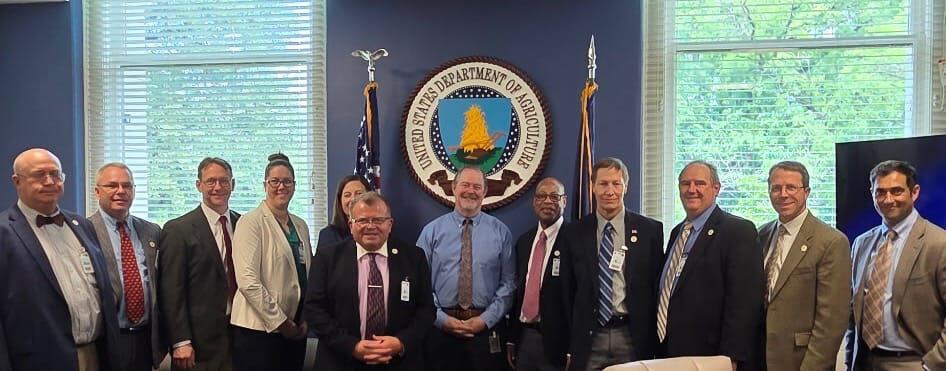
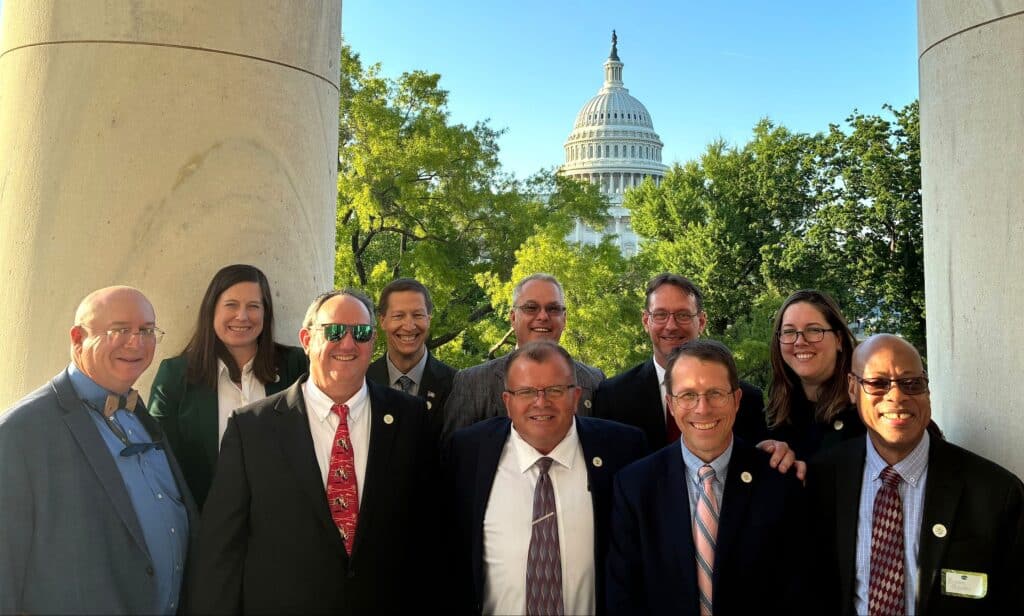
WESTMINSTER, Colorado – 19 May 2026 – Leaders from the Weed Science Society of America (WSSA) and its affiliates met with key USDA and EPA representatives and ag committee legislators in Washington, D.C., last month, with encouraging results. WSSA’s main goal during the visit was to communicate its core policy positions to relevant executive branch administrators and ag committee legislators and to promote its science-proven practices, programs and policies to protect the nation’s ecosystems and ensure a safe, secure and reliable food supply.
“I do think we were successful in promoting our policies, and it’s evident that repeated visits have had a positive impact,” says Ian Burke, Ph.D., WSSA president. “The staffers we met with last year remembered us and our priorities.”
The meetings occurred amid a renewed push to complete this year’s Farm Bill and ongoing USDA and Agricultural Research Service (ARS) reorganization announcements. “Our visit with the USDA-ARS leadership was particularly helpful, says Burke. “They stressed a renewed focus on hiring, which aligns with our emphasis on the need to rebuild weed science expertise within the ARS,” he says.
Despite the hectic pace and ongoing political negotiations, “legislators reassuringly indicated to us their strong support for capacity funds, and their support for IR-4 projects,” says Burke. “Capacity funds are the federal appropriations critical to land‐grant research, extension, and education efforts, and the IR‐4 Project provides funding for growers, scientists, and industry to work together to generate data to register crop‐protection products for specialty crops, fruits and vegetables.”
In addition, meetings with Environmental Protection Agency (EPA) representatives helped to clarify the agency’s efforts to reduce an ongoing Pesticide Registration Improvement Act (PRIA) backlog and highlighted the interagency tensions constraining EPA action. “Adhering to timelines will ensure transparent, efficient EPA evaluations that will enable greater innovation from industry stakeholders,” points out Burke.
“Lastly, our fly-in has strengthened the relationship among the regional and national weed science societies,” he says. “The team of regional society presidents this year and last year are an amazing group of people. It’s been a real privilege to get to work alongside them for both visits.”
With more than 2,000 members, WSSA is a non-profit professional organization that represents academic (extension, education, and research faculty and staff), government, industry, private consultants, and independent researchers – plus students and federal, state, county, and private land and aquatic plant managers. All are dedicated to fostering an awareness of weeds, their impact on vital ecosystems, and how best to manage them.
WSSA’s current policy priorities can be found online at this policy weblink. These priorities include focus areas on extension and research; integrated weed management; crop productivity and sustainability; and workforce competency. More information about WSSA policy positions can be found on its science policy webpage.
-###-
About the Weed Science Society of America
The Weed Science Society of America is a nonprofit scientific society, founded in 1956, to encourage and facilitate the development of knowledge concerning weeds and their impact on the environment. The Society promotes research, education and extension outreach activities related to weeds, provides science-based information to the public and policy makers, fosters awareness of weeds and their impact on managed and natural ecosystems, and strengthens cooperation among weed science organizations across the nation and around the world. For more information, visit www.wssa.net.
Media Contact:
Lee Van Wychen
Executive Director of Science Policy
Weed Science Society of America
202-746-4686